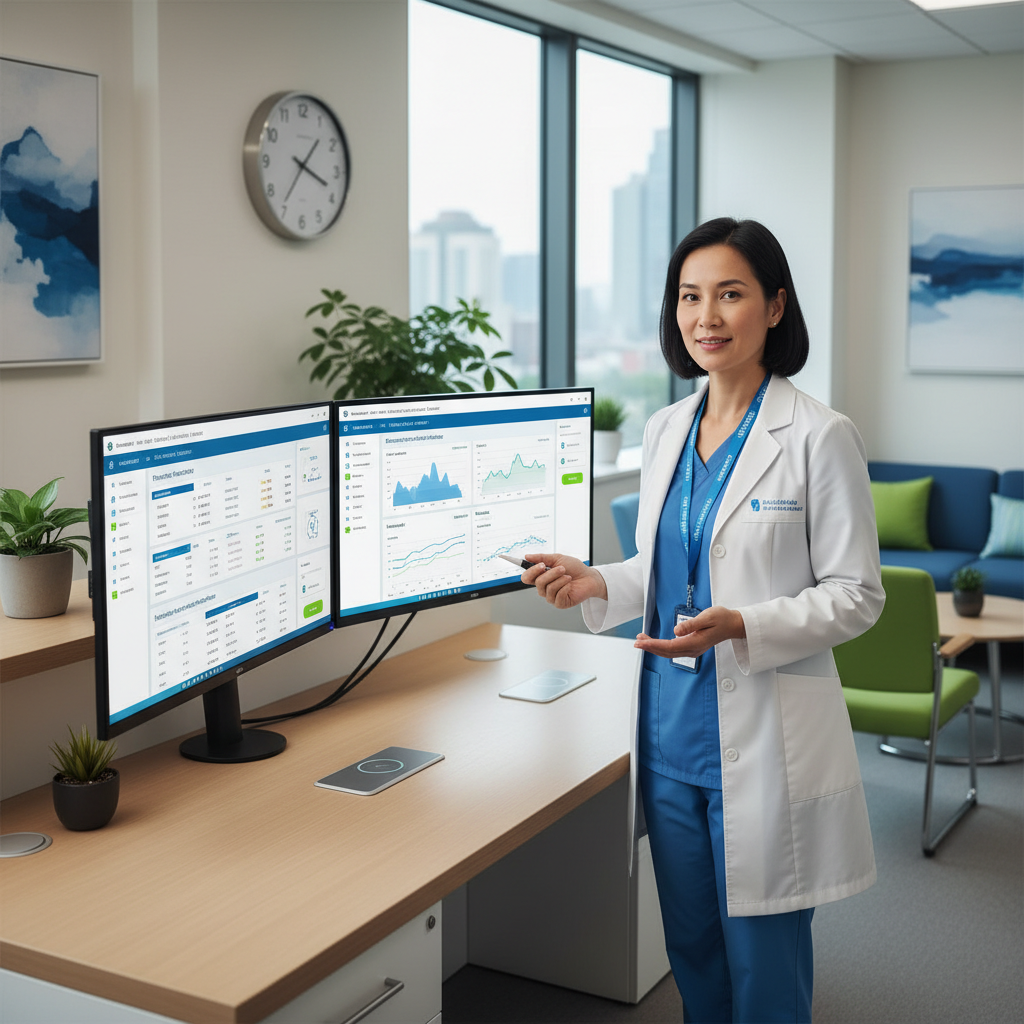
Women's Hormone Health in the Digital Age: How Telehealth Is Transforming HRT Access
The landscape of women's hormonal healthcare is undergoing a profound transformation—one driven not just by evolving clinical science, but by the digital infrastructure now making expert care accessible to millions of women who previously faced significant barriers. For decades, navigating menopause
Women's Hormone Health in the Digital Age: How Telehealth Is Transforming HRT Access
The landscape of women's hormonal healthcare is undergoing a profound transformation—one driven not just by evolving clinical science, but by the digital infrastructure now making expert care accessible to millions of women who previously faced significant barriers. For decades, navigating menopause, perimenopause, and hormonal imbalance often meant long waits, limited providers, geographic constraints, and inconsistent treatment philosophies. Today, women's health telehealth platforms like iScript.care are closing those gaps, delivering physician-led hormone replacement therapy consultations, personalized treatment plans, and ongoing monitoring from the comfort of home—all with the clinical rigor that women deserve.
---
The Hormonal Health Crisis Women Face Today
Nearly 6,000 women enter menopause every day in the United States, according to the North American Menopause Society. That translates to over 1.3 million American women per year reaching this pivotal transition—yet the majority report feeling unprepared, underserved, or dismissed by the healthcare system.
Despite decades of research and the clear efficacy of hormone replacement therapy (HRT) for managing menopausal symptoms, only an estimated 12% of menopausal women in the U.S. actually use it. This treatment gap is not due to lack of need—it's due to lack of access, lack of informed providers, lingering fears rooted in outdated research, and systemic healthcare barriers.
What Women Are Actually Experiencing
The symptoms of perimenopause and menopause extend far beyond hot flashes. Women navigating this transition often contend with:
The consequences are not merely uncomfortable—they are clinically significant. According to data published in JAMA Internal Medicine, severe vasomotor symptoms are associated with increased cardiovascular risk, reduced quality of life, and higher rates of depression. Yet these women are often prescribed antidepressants or told to "push through it" rather than offered evidence-based hormonal intervention.
Why the Access Gap Exists
The barriers to HRT access are multifactorial:
---
How Telehealth Is Reshaping HRT Access
Menopause treatment via telehealth represents one of the most clinically appropriate applications of digital health. Hormone therapy evaluation is largely history-driven, patient-reported symptom-based, and lab-confirmable—making it well-suited to virtual care delivery without compromising quality.
The Clinical Case for Virtual HRT Consultations
The Centers for Medicare & Medicaid Services (CMS) has expanded telehealth coverage significantly in recent years, and private insurers have followed. This policy shift acknowledges what clinicians have observed: many aspects of hormone health evaluation can be conducted with high fidelity through secure video consultation.
A virtual HRT consultation on an AI-powered platform like iScript.care typically involves:
Dr. Chomba Chuma, MD, Founder of iScript.care, has been a consistent advocate for this model: "Women deserve physician-grade hormone care without having to drive an hour to a specialist or wait three months for an appointment. The technology now exists to deliver that care safely, consistently, and at scale."
What "HRT Online" Actually Looks Like
The term HRT online encompasses a spectrum of services, and not all are created equal. At iScript.care, the telehealth programs are built around physician leadership, evidence-based protocols, and continuity of care—not just prescription-writing convenience.
Here's how a responsible telehealth HRT experience should unfold:
---
Infographic Insight
Visual Concept: "The 7-Step Telehealth HRT Journey" — What Women Should Expect
An effective infographic for this section should illustrate the patient pathway through a telehealth HRT program using a numbered step-by-step flowchart or timeline. Key data points to include:
Design recommendation: Use a warm, professional color palette (deep teal, blush, gold). Include female silhouette icons at each step. Add iScript.care branding and a QR code linking to the telehealth programs page.
---
Understanding the Types of HRT Available Online
Estrogen therapy online is not one-size-fits-all. A physician-led telehealth platform should offer access to the full spectrum of clinically validated options, with individualized selection based on patient history, preferences, and contraindications.
Systemic Hormone Therapy
| HRT Type | Route | Best For | Progestogen Required? | Common Formulations |
|---|---|---|---|---|
| Estrogen-only | Oral, patch, gel, spray | Women post-hysterectomy | No | Estradiol, Premarin |
| Combined E+P | Oral, patch, IUS | Women with intact uterus | Yes (endometrial protection) | Combipatch, Bijuva, Mirena IUD |
| Bioidentical HRT | Oral, patch, gel, pellet | Patients preferring body-identical hormones | Depends on uterine status | Estradiol + micronized progesterone |
| Low-dose vaginal estrogen | Cream, ring, tablet, suppository | GSM symptoms only | No (minimal systemic absorption) | Vagifem, Estring, Estrace cream |
| DHEA (Prasterone) | Vaginal insert | Dyspareunia in menopause | No | Intrarosa |
| Ospemifene | Oral SERM | GSM, cannot use estrogen | No | Osphena |
Bioidentical vs. Synthetic: Clearing Up the Confusion
One of the most common questions patients ask is about bioidentical hormone therapy. Here's what the evidence actually shows:
At iScript.care, our provider network includes physicians and advanced practice providers trained in nuanced HRT formulation decisions—not just default prescribing.
---
The Safety Question: What the Current Evidence Actually Says
No discussion of hormone replacement therapy would be complete without addressing the safety concerns that have shaped (and sometimes distorted) clinical practice for over two decades.
Revisiting the WHI: What We Know Now
The 2002 Women's Health Initiative (WHI) trial caused widespread abandonment of HRT when it reported increased risks of breast cancer, stroke, and heart disease. However, subsequent analysis has substantially refined these findings:
"The WHI studied older women (average age 63) using oral conjugated equine estrogen combined with medroxyprogesterone acetate—a specific combination in a specific population. Applying those findings universally to all women, all formulations, and all ages was a clinical overcorrection that left millions of women undertreated."
— Adapted from the 2022 Menopause Society Position Statement on HRT
Key evidence-based clarifications include:
For women with the right clinical profile — recently menopausal, symptomatic, without contraindications — the benefit-risk calculation is strongly favorable for HRT.
---
Remote Patient Monitoring and Women's Hormone Health
One underutilized dimension of women's health telehealth is remote patient monitoring (RPM), which allows for ongoing physiological data collection between appointments.
For hormone health specifically, RPM-enabled platforms can track:
iScript.care's chronic care and remote monitoring programs are designed to bridge the gap between appointments, ensuring that hormone therapy patients aren't simply prescribed and forgotten—but actively monitored, with clinical escalation pathways when data trends warrant attention. Learn more about the connected devices used in these programs.
This kind of continuous engagement is what separates a truly physician-led digital health platform from a simple prescription-delivery app.
---
Who Is a Candidate for Telehealth HRT?
Not every woman is an appropriate candidate for HRT, and not every woman needs a specialist in person. Here's a practical framework:
Generally Appropriate for Telehealth HRT Evaluation
May Require In-Person or Specialist Evaluation First
Our platform's intake process — guided by AI-assisted screening and physician review — ensures that every patient is appropriately triaged. Those requiring higher-level evaluation are referred accordingly. Have questions about fit? Visit our FAQ page or contact our team directly.
---
The iScript.care Difference: Physician-Led, AI-Powered, Patient-Centered
Many telehealth platforms have entered the women's hormone health space. What distinguishes iScript.care is the clinical philosophy at its foundation.
Dr. Chomba Chuma, MD, built iScript.care on the principle that technology should amplify physician expertise—not replace it. The platform's AI infrastructure supports:
Unlike platforms that operate as prescription mills, iScript.care's provider network consists of physicians and advanced practitioners who engage in genuine shared decision-making with each patient. Treatment plans are individualized, not templated.
Additionally, iScript.care integrates hormone health within a broader continuum of women's wellness — including weight management through the GLP-1 program, which is clinically relevant given that metabolic changes during menopause significantly affect cardiovascular risk and quality of life. Explore more health topics in our resource library.
---
Conclusion
The convergence of clinical science, digital infrastructure, and shifting healthcare policy has created a genuine opportunity to close the hormone health gap that has left millions of women undertreated for decades. Menopause treatment via telehealth is not a compromise—when executed with physician leadership, evidence-based protocols, and robust monitoring, it is a clinically sound and often superior care model for the majority of women seeking hormone replacement therapy.
The data is clear: HRT is safe and effective for the right patient, the barriers to access are largely structural rather than clinical, and telehealth platforms have the tools to dismantle those barriers. What's needed now is physician-led platforms willing to do the hard work of individualized care at scale.
At iScript.care, that's exactly what we're building—one patient at a time, under the medical leadership of Dr. Chomba Chuma, MD, and powered by an AI-driven platform that keeps clinical excellence at the center of every interaction.
---
Women's hormone health is too important to leave to chance, geography, or outdated clinical fears. If you or a patient is ready to explore evidence-based, physician-led hormone care, start a free assessment at iScript.care today—or contact our clinical team to learn how we can support your practice or your patients. Visit our about page to learn more about our mission and the physicians behind the platform.
---
References and Further Reading:
Ready to Launch Your RPM / CCM Program?
iScript.care manages everything — clinical staff, devices, billing reports. You focus on your patients.