Why 4G Cellular RPM Devices Outperform WiFi-Based Monitors for Medicare Patients
Remote patient monitoring (RPM) has transformed how physicians manage chronic conditions outside the clinic — but the technology powering that monitoring is not all created equal. For Medicare patients, many of whom live in rural areas, have limited digital literacy, or rely on complex medication re
Why 4G Cellular RPM Devices Outperform WiFi-Based Monitors for Medicare Patients
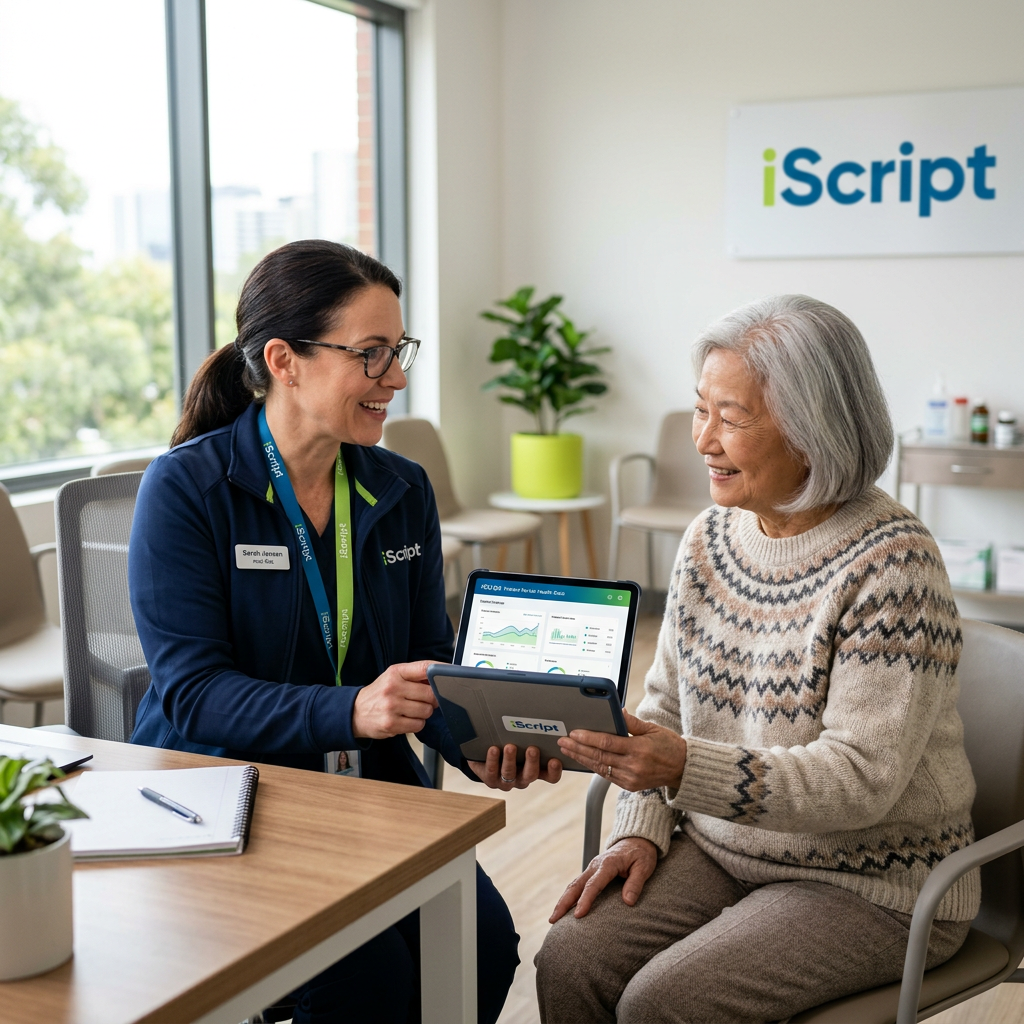
Remote patient monitoring (RPM) has transformed how physicians manage chronic conditions outside the clinic — but the technology powering that monitoring is not all created equal. For Medicare patients, many of whom live in rural areas, have limited digital literacy, or rely on complex medication regimens, the difference between a cellular RPM device and a WiFi-based monitor can mean the difference between timely intervention and a preventable hospitalization. At iScript.care, Dr. Chomba Chuma, MD has made it a clinical priority to equip patients with monitoring technology that actually works in the real world — not just in controlled environments.
---
The Promise and the Problem: How RPM Technology Is Supposed to Work
Remote patient monitoring under Medicare's CPT framework — specifically codes 99453, 99454, 99457, and 99458 — requires that a patient's physiological data be transmitted regularly and reviewed by a qualified clinical team. The operational logic seems straightforward: the patient uses a device at home, the data is sent to the provider, and the clinical team responds.
But there is a critical vulnerability in this chain: connectivity.
When a device depends on a home WiFi network to transmit data, it introduces a cascade of failure points:
For a younger, tech-savvy patient, troubleshooting these issues may take minutes. For a 75-year-old Medicare patient managing heart failure, diabetes, and COPD simultaneously, it may mean days or weeks of lost data — or complete disengagement from the program entirely.
Why WiFi RPM Failure Is a Hidden Epidemic
WiFi-related monitoring gaps rarely generate incident reports. They simply appear as missing data points in a dashboard. Clinicians may not realize that a patient's blood pressure cuff stopped transmitting until a gap in readings becomes medically significant. This "silent failure" problem is one of the most underappreciated threats to RPM program integrity.
According to a study published in JAMA Network Open, patient engagement in RPM programs declines sharply when technical difficulties arise, with adherence dropping as much as 40% within the first 90 days in programs relying on app-dependent or WiFi-tethered devices. The behavioral economics here matter: once a patient disconnects — physically or emotionally — re-enrollment is extremely difficult.
---
What Makes Cellular RPM Devices Fundamentally Different
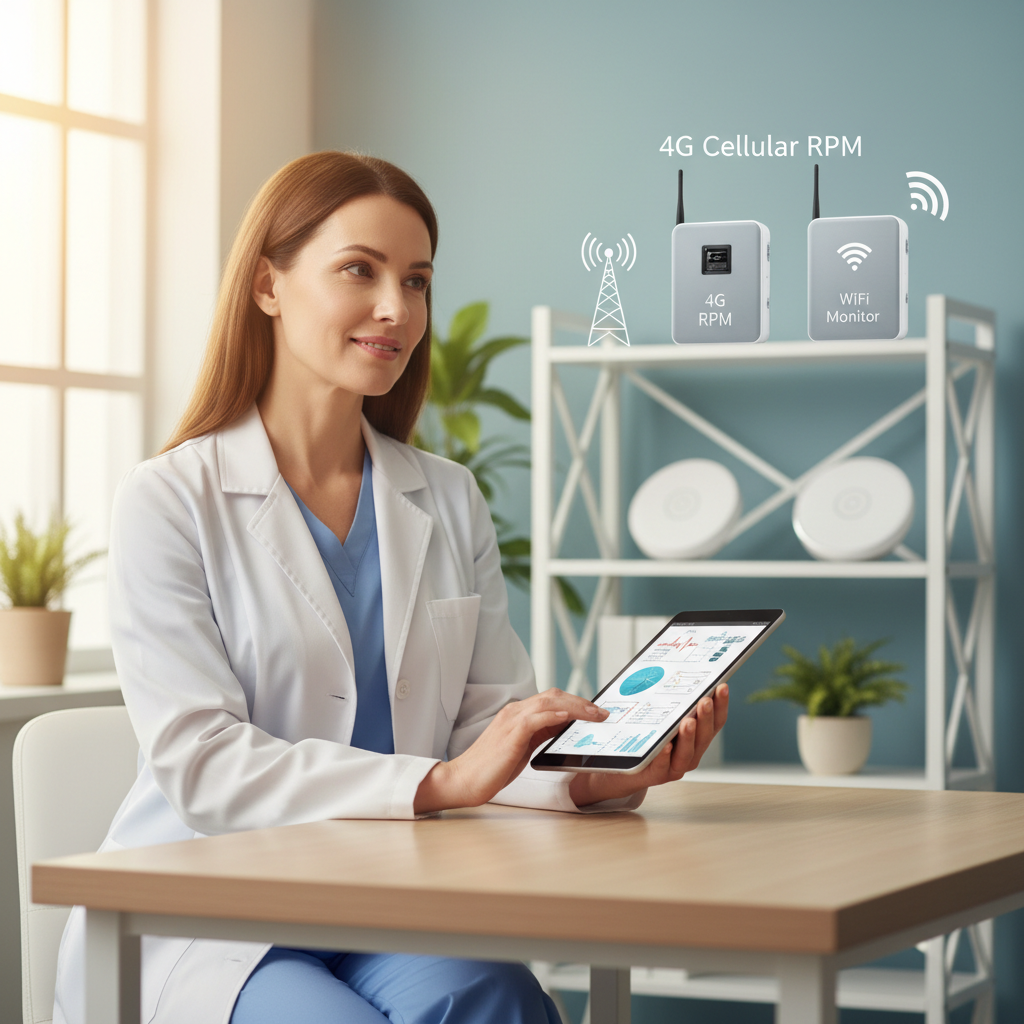
A 4G remote patient monitoring device doesn't ask the patient to do anything except use the device. There is no app to open, no WiFi password to enter, no Bluetooth pairing sequence to remember. The device contains an embedded SIM card — similar to a smartphone — and transmits data directly over the cellular network the moment a measurement is taken.
This architectural difference is not a minor convenience feature. It is a clinical reliability mechanism.
How Cellular Transmission Works in Practice
When a Medicare patient with hypertension takes their morning blood pressure reading on a 4G-enabled cellular RPM device:
No smartphone. No WiFi. No caregiver assistance required. The process is completely autonomous from the patient's perspective.
The Tenovi Devices Advantage
iScript.care partners with Tenovi — a leading cellular health monitoring manufacturer — for its RPM device ecosystem. Tenovi devices are specifically engineered for the Medicare population, offering:
Tenovi's cellular gateway model means that even in rural areas with limited broadband access, patients can reliably transmit vitals as long as cellular service is available — which covers the vast majority of the U.S. population.
Learn more about the specific RPM devices available through iScript.care and how they are matched to individual patient conditions.
---
Infographic Insight
Visual Concept: "WiFi vs. Cellular RPM — The Patient Journey Comparison"
This infographic should illustrate two parallel patient journeys (WiFi-based vs. 4G cellular) from device setup to data transmission, highlighting where failure points occur.
Key data points and steps to illustrate:
---
Medicare RPM Adherence: Why It Matters Clinically and Financially
Medicare RPM adherence is not just a billing metric — it is a direct proxy for the quality of chronic disease management a patient receives. Under CMS guidelines for RPM, CPT code 99454 requires at least 16 days of data collection per 30-day period to qualify for reimbursement. That threshold exists because the clinical evidence supporting RPM's effectiveness is based on sustained, consistent monitoring — not sporadic readings.
If a patient's WiFi router goes down for five days, or if they can't reconnect their device after a power outage, that billing cycle may be lost — and more importantly, the clinical window for early intervention narrows.
The Real Cost of Connectivity Gaps
Consider a Medicare patient with uncontrolled hypertension. Clinical guidelines from the American Heart Association emphasize that consistent home blood pressure monitoring significantly reduces cardiovascular event risk when paired with clinical follow-up. RPM is designed to enable exactly this — but only if data is consistently flowing.
A connectivity gap of 5–10 days in such a patient could mean:
From a financial standpoint, the average Medicare hospitalization for cardiovascular causes costs over $15,000 per admission. The annual cost of an RPM program per patient is a fraction of that figure. Connectivity reliability is not a technology preference — it is cost-effective medicine.
---
Comparing Cellular vs. WiFi RPM Devices: A Head-to-Head Analysis
The table below provides a direct comparison of key performance and usability metrics between cellular RPM devices and traditional WiFi-based monitoring solutions for the Medicare population.
| Feature | 4G Cellular RPM (e.g., Tenovi) | WiFi-Based RPM |
|---|---|---|
| Setup complexity | Minimal (1–2 steps) | High (5–7 steps, app required) |
| Patient technical literacy required | Low | Moderate to High |
| Connectivity dependency | Cellular network (99% U.S. coverage) | Home broadband (~82% coverage) |
| Failure points | Very few (SIM, carrier signal) | Many (router, app, Bluetooth, ISP) |
| Data transmission reliability | High (automatic, passive) | Variable (user-dependent) |
| Rural suitability | Excellent | Limited |
| HIPAA-compliant transmission | Yes (encrypted cellular) | Varies by platform |
| Medicare 99454 compliance rate | Higher adherence to 16-day threshold | Lower adherence due to dropout |
| Patient caregiver burden | Very low | Moderate to high |
| Typical patient age suitability (65+) | Excellent | Fair |
| Silent failure risk | Low | High |
| Average re-engagement after failure | Not applicable (no gaps) | Difficult; 30–40% abandon program |
---
How iScript.care's Doctor-Led Platform Leverages Cellular RPM
What separates iScript.care from generic RPM vendors is the physician-led, AI-powered infrastructure that surrounds every device. Dr. Chomba Chuma, MD designed iScript.care from the ground up with a singular principle: technology should reduce friction for patients and amplify clinical capacity for providers, never the reverse.
This philosophy is operationalized in several ways:
AI-Powered Alert Triage
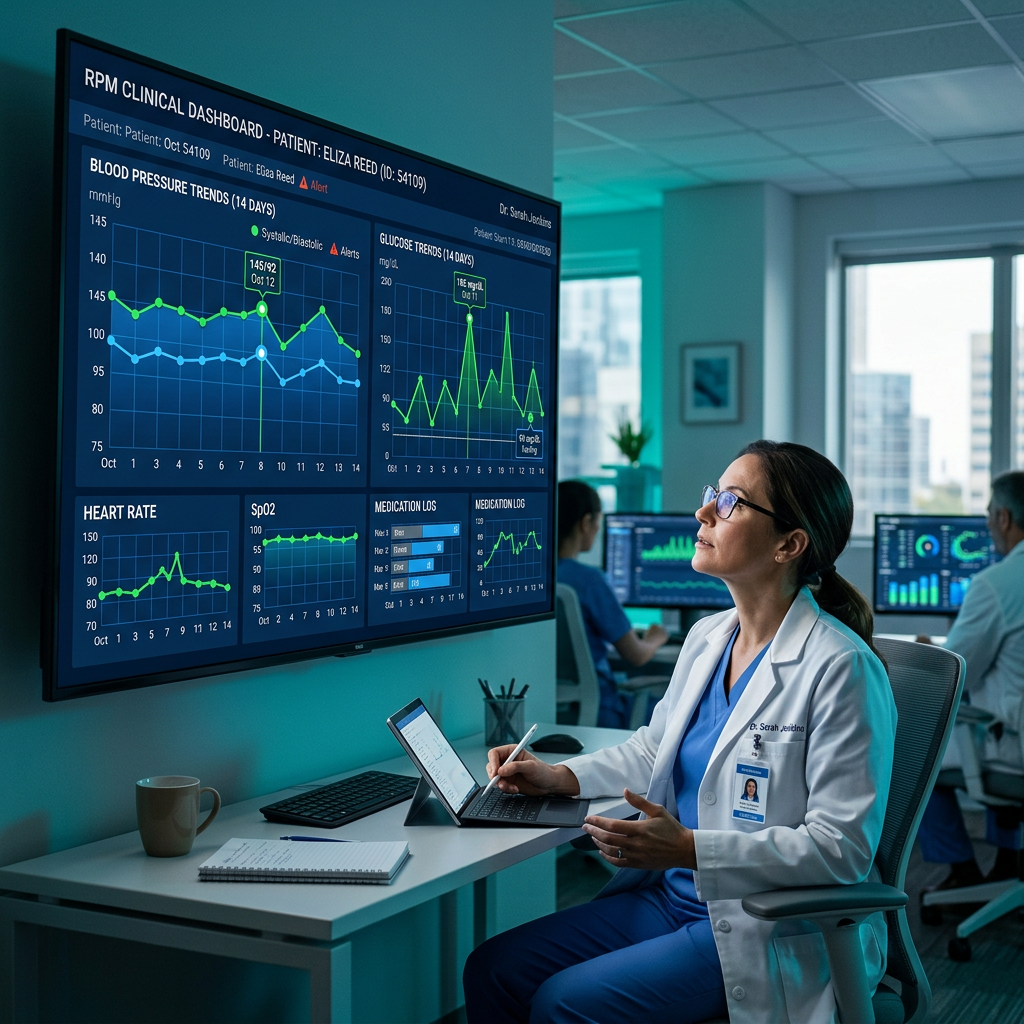
When a Tenovi cellular device transmits a reading outside pre-set clinical parameters, iScript.care's AI platform doesn't just log it — it triages the alert based on the patient's medical history, trending data, and risk stratification. This reduces alarm fatigue for clinical staff while ensuring that genuinely urgent alerts receive immediate human attention.
Integrated Chronic Care Management (CCM)
RPM doesn't exist in a vacuum at iScript.care. It is embedded within a comprehensive Chronic Care Management and Remote Patient Monitoring program that includes:
Provider Network Integration
Physicians who partner with iScript.care through our provider network gain access to the full cellular RPM infrastructure — including Tenovi device management, data dashboards, and clinical support — without having to build or manage the technology stack themselves.
---
Rural Medicare Patients: The Population Most Harmed by WiFi RPM Failure
It is worth pausing on a population that is often discussed in policy documents but underserved in practice: rural Medicare patients. According to the FCC's Broadband Deployment Report, approximately 18–21% of rural Americans lack access to fixed broadband at speeds adequate for reliable data transmission.
For a Medicare RPM program that depends on home WiFi, this means roughly 1 in 5 rural patients is excluded from the start — or enrolled into a program that will predictably fail for them. This is not only a clinical equity issue; it is a structural flaw in how many RPM programs are designed.
4G remote patient monitoring devices resolve this equity gap directly. As long as a patient lives in an area with cellular coverage — and the major U.S. carriers collectively cover the overwhelming majority of even rural geographies — they can participate in a fully functional RPM program. The device requires nothing from the patient's home infrastructure.
This is why iScript.care's cellular-first approach is not simply a technology preference — it is a health equity decision.
---
Frequently Asked Questions About Cellular RPM for Medicare
Does Medicare cover cellular RPM devices?
Yes. Medicare covers RPM services under CPT codes 99453, 99454, 99457, and 99458 regardless of whether the device uses cellular or WiFi connectivity. The reimbursement is linked to data collection days and clinical time — not transmission method. Cellular devices often achieve higher reimbursement rates simply because they generate more qualifying data days due to higher adherence. Visit our RPM FAQ page for detailed billing guidance.
What happens if a patient loses cellular signal temporarily?
Tenovi devices are designed to store readings locally when cellular signal is unavailable and transmit them automatically when connectivity is restored. This ensures data integrity is maintained even in areas with intermittent coverage.
Are cellular RPM devices more expensive than WiFi models?
The upfront device cost may be marginally higher for cellular models due to the embedded SIM and cellular module. However, when accounting for reduced program dropout, higher billing compliance, and fewer support calls, the total cost of ownership for cellular RPM programs is consistently lower over a 12-month program period.
Can patients use cellular RPM devices without a smartphone?
Absolutely — and this is one of the most important clinical advantages. Tenovi's cellular RPM devices are completely standalone. Patients do not need a smartphone, tablet, or any secondary device. This is particularly critical for Medicare beneficiaries who may not own or use smartphones regularly.
---
Conclusion
The evidence is clear, and the clinical logic is compelling: 4G cellular RPM devices outperform WiFi-based monitors for Medicare patients across virtually every meaningful metric — adherence, reliability, equity, simplicity, and clinical impact. WiFi RPM failure is not a patient problem; it is a design problem. When the tools we give patients are too complex for consistent use, the failure belongs to the program, not the person.
At iScript.care, Dr. Chomba Chuma, MD has built a physician-led, AI-powered RPM platform that starts with the right technology — specifically, Tenovi cellular devices — and surrounds them with the clinical infrastructure needed to translate data into outcomes. Our Chronic Care Management and Remote Patient Monitoring program is designed to meet Medicare patients where they are: in their homes, in rural communities, and across every stage of chronic disease management.
For healthcare providers looking to launch or improve an RPM program, the device selection decision is not merely operational — it is clinical. Choosing cellular connectivity is choosing reliability. Choosing reliability is choosing better outcomes.
If you are a provider, administrator, or patient interested in learning how iScript.care's cellular RPM program can serve your practice or your community, we encourage you to explore our telehealth programs, review our device options, or connect directly with our team to schedule a program consultation. The right technology, paired with physician-led oversight, is how RPM fulfills its promise — for every patient, in every ZIP code.
---
Dr. Chomba Chuma, MD is the founder and medical director of iScript.care, a physician-led AI-powered telehealth and remote patient monitoring platform dedicated to improving chronic disease outcomes for Medicare and commercially insured patients nationwide. Learn more at our About page or explore the full iScript.care Resource Library.
Ready to Launch Your RPM / CCM Program?
iScript.care manages everything — clinical staff, devices, billing reports. You focus on your patients.