Medicare dollar amounts in older articles are not current. Calendar year 2026 national non-facility amounts are on the chronic care page. This article is not a quote of what a practice will be paid.
Why 4G Cellular Devices Solve the RPM Adherence Problem Once and For All
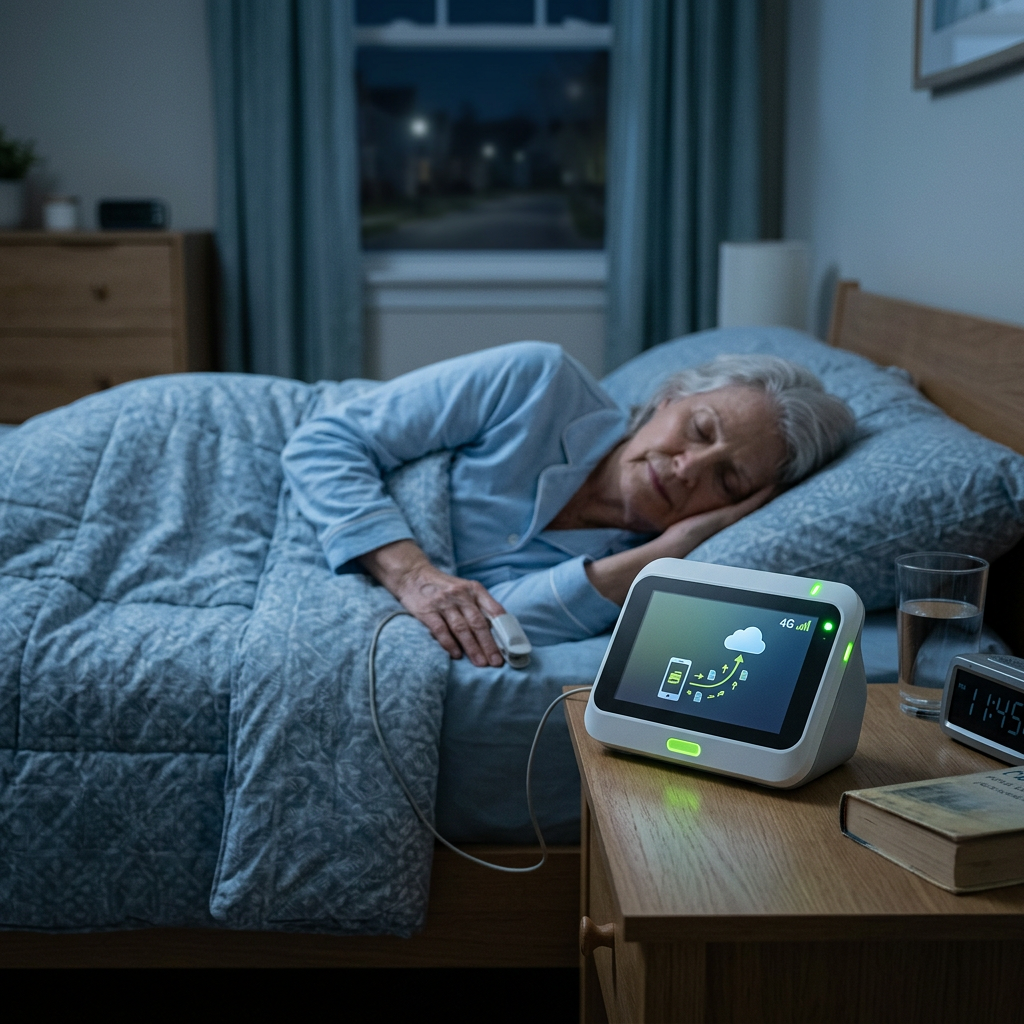
Core RPM devices transmit through a 4G cellular gateway, so the patient does not need Wi-Fi, an app, or a smartphone. Current Medicare amounts are on the chronic care page.
Device adherence — specifically achieving 16+ reading days per month — is the single biggest obstacle to RPM program success. Without it, CPT 99454 cannot be billed, eliminating approximately $46/patient/month in revenue. Multiply this across 100 patients and the financial impact of poor adherence becomes stark.
The adherence problem is not a patient problem. It's a technology problem. And 4G cellular connectivity is the solution.
Why WiFi and Bluetooth Devices Fail Medicare Patients
Most competing RPM devices require a fragile chain of dependencies that breaks repeatedly in real-world Medicare patient environments:
| Dependency | Failure Rate | Impact | |------------|-------------|--------| | Home WiFi network | ~30% of Medicare patients lack access | No data transmission | | Smartphone app | Many elderly patients cannot manage apps | No data sync | | Bluetooth pairing | Re-pairs required after battery changes | Lost readings | | Active patient engagement | Motivation decreases over time | Missed days |
Each broken link in this chain means lost data, lost adherence, and lost reimbursement. For every day below 16, the practice loses $46/patient/month. For every patient who drops out of the program, the practice loses $242/month.
The 4G Cellular Solution: How It Works
iScript.care's cellular gateway eliminates every dependency in the WiFi/Bluetooth chain:
- Patient takes a reading — presses one button on an FDA-cleared device
- Device transmits via Bluetooth to the gateway — automatically, within seconds
- Gateway transmits via 4G LTE-M cellular — directly to iScript.care's HIPAA-compliant cloud
- Data appears in the clinical dashboard — ready for monitoring team review
No WiFi. No app. No smartphone. No patient tech support. No Bluetooth re-pairing. The gateway plugs into any wall outlet and does everything else automatically.
The Numbers: Cellular vs. WiFi
| Metric | WiFi-Dependent Devices | iScript.care 4G Cellular | |--------|----------------------|------------------------| | % patients achieving 16+ days | ~61% | ~88% | | Average reading days/month | ~18 | 24+ | | CPT 99454 eligibility rate | ~61% | ~88% | | Adherence improvement | Baseline | +27% |
A 27% adherence improvement is not a marginal gain — it is the difference between a financially viable RPM program and one that fails to generate sufficient revenue to justify the administrative overhead.
The Business Case: What 27% More Adherence Is Worth
For a practice with 100 RPM patients:
With WiFi devices: ~61 patients billing 99454 = ~$2,806/month from this code alone With iScript.care cellular: ~88 patients billing 99454 = ~$4,048/month
Difference: +$1,242/month ($14,904/year) from CPT 99454 alone — on 100 patients, just from the adherence improvement.
When factoring in the full code stack (99457, 99458) for those additional 27 patients: the incremental annual value is approximately $39,204/year for a 100-patient panel.
Why Consumables Matter Too
One overlooked adherence driver is running out of consumables — test strips, lancets, batteries. When a diabetic patient's test strips run out, they stop using the glucometer. When batteries die, the gateway goes offline.
iScript.care includes all consumables with the service — test strips, lancets, and batteries shipped proactively based on usage patterns. This eliminates one of the most common causes of adherence gaps.
Automated Adherence Reminders
For patients trending below 16 reading days by mid-month, iScript.care's platform automatically:
- Sends an SMS reminder to the patient
- Alerts the care manager for a proactive outreach call
- Documents the intervention for billing compliance
This three-layer intervention system recovers the majority of patients at risk of missing the 99454 threshold.
Conclusion
The RPM adherence problem is entirely solvable — with the right technology. 4G cellular devices eliminate the barriers that cause WiFi and Bluetooth-dependent devices to fail Medicare patients. The financial impact of choosing cellular over WiFi RPM devices is measurable, significant, and compounding. iScript.care's 4G cellular platform is the standard for reliable, high-adherence RPM in primary care.
If this fits your practice, apply and we will call you.
$34.95 per enrolled patient per programme, or $55.00 for two. Invoiced monthly in arrears; due within 45 days. The practice bills Medicare under its own NPI.