What Happens When You Stop GLP-1: The Rebound Effect and How to Prevent It
Understand why weight regain happens after stopping GLP-1 medications and learn the clinical steps to prevent the rebound effect.
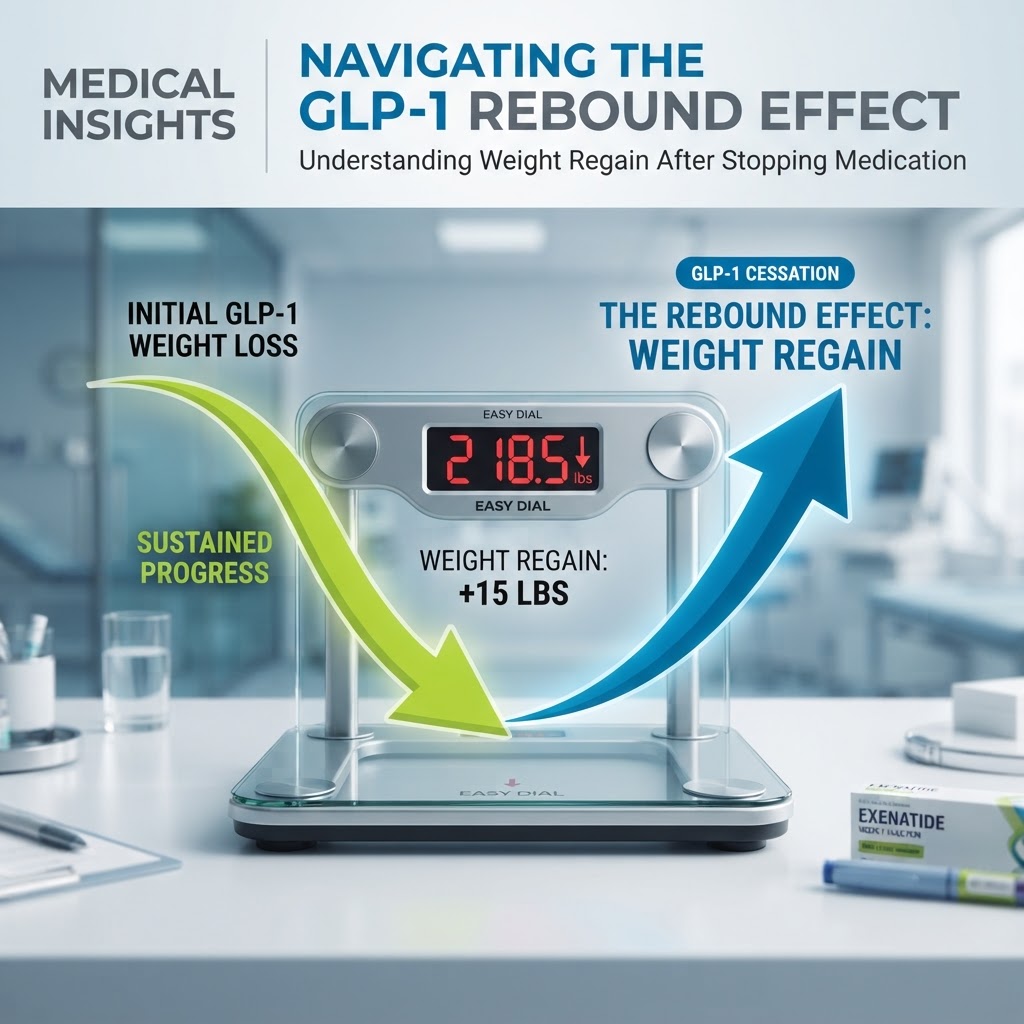
The finding is sobering: in the STEP 1 trial extension, participants regained about two-thirds of the weight they had lost within a year of withdrawing semaglutide (Wilding et al., Diabetes, Obesity and Metabolism, 2022). But this isn't a personal failure — it's a predictable biological response, and it is the reason how you come off treatment matters as much as how you start.
Why the Rebound Happens
When you stop GLP-1 medication, three things happen simultaneously:
- Appetite Returns — The artificial satiety signal disappears. Your brain's natural hunger circuits, suppressed for months, reactivate with intensity.
- Metabolic Adaptation Persists — If you lost muscle during treatment, your BMR remains suppressed. You're burning fewer calories than before you started.
- No Behavioral Scaffold — Without established habits, patients return to pre-treatment eating patterns.
Two trials bracket this. In the STEP 1 extension, participants who came off semaglutide regained about two-thirds of the weight they had lost over the following year (Wilding et al., Diabetes, Obesity and Metabolism, 2022). In STEP-4, a randomised-withdrawal trial, participants who continued semaglutide maintained their weight loss while those switched to placebo regained (Rubino et al., JAMA, 2021). Together they point at the same conclusion: the loss holds while treatment holds, and coming off it needs a plan.
The Critical 90-Day Post-Discontinuation Window
The period immediately after stopping is when regain risk is highest, because several things that treatment was holding down are released at once:
- Appetite signalling rebounds — the hunger drive that the medication suppressed returns
- Satiety signalling stays blunted after weight loss, so meals feel less filling than they used to
- Energy expenditure remains lower than it was at the starting weight, so the same intake goes further
The 4 Pillars of Rebound Prevention
- Gradual Dose Reduction — Work with your care team to taper down, not stop abruptly
- Protein-Forward Nutrition — Maintain protein targets to preserve muscle and metabolism
- Resistance Training — 2-3 sessions/week to rebuild metabolic rate
- Continuous Monitoring — Smart scale tracks weight trends, enabling early intervention
How Aftercare Helps During Transition
Whether you're staying on GLP-1 long-term, reducing your dose, or transitioning off entirely:
- NP Care Manager adjusts your plan based on medication status
- Smart Scale detects weight trends before they become regain
- Nutrition Coaching maintains protein targets through transition
- Weekly Check-ins address anxiety and behavioral challenges
- Contact Schedule provides regular clinical touchpoints
Ready to Take Control of Your GLP-1 Journey?
Whether you need a prescription or already have one — we've got you covered.