Medicare dollar amounts in older articles are not current. Calendar year 2026 national non-facility amounts are on the chronic care page. This article is not a quote of what a practice will be paid.
Future of Chronic Care Management: Trends and Innovations to Watch
AI-powered care plans, gamified patient engagement, RTM expansion, and value-based bundled payments are reshaping CCM. Here are the key trends every primary care practice needs to understand for the decade ahead.
Chronic Care Management has evolved significantly in recent years, driven by advancements in technology, changing healthcare policies, and a growing emphasis on patient-centered care. As the prevalence of chronic conditions continues to rise, the healthcare industry is turning to innovative solutions to address the unique challenges of managing these conditions.
1. The Growing Role of Technology in CCM
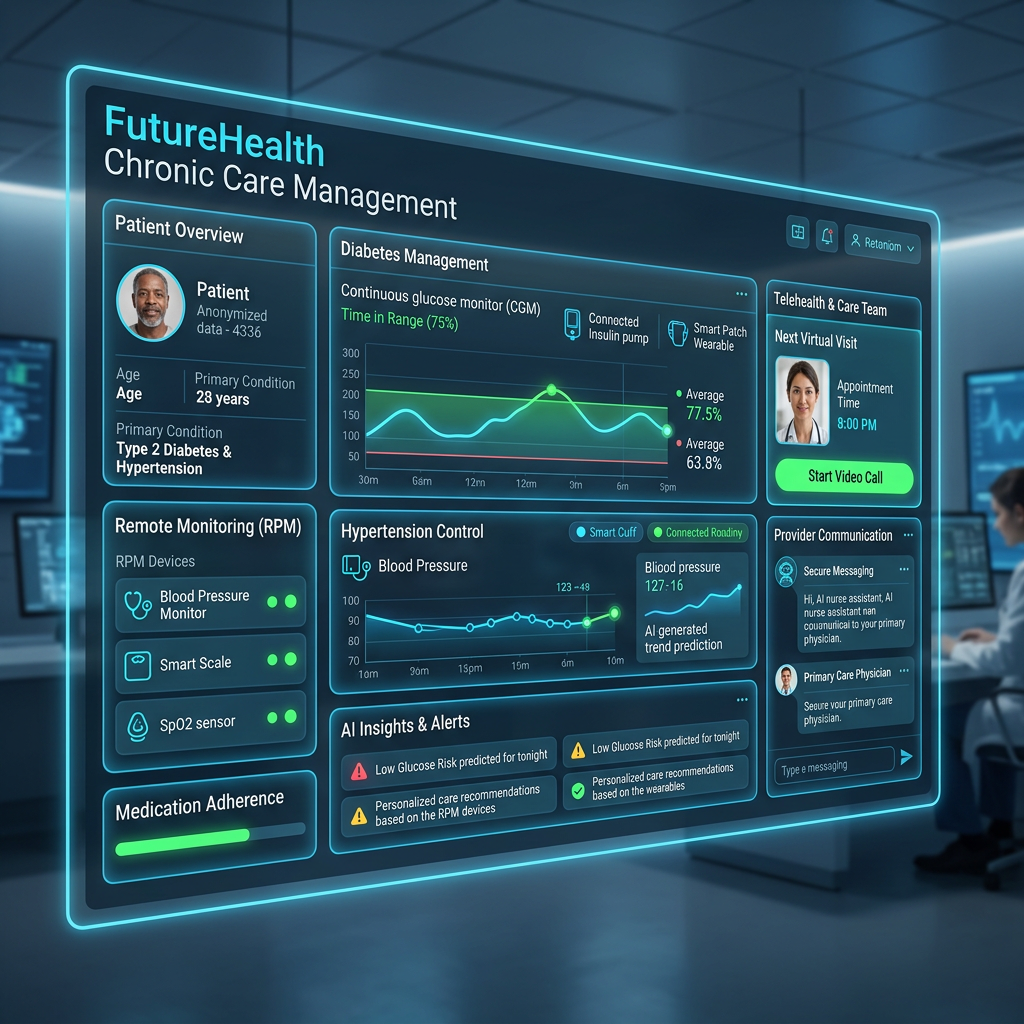
Remote Patient Monitoring and Wearable Devices One of the most significant advancements in CCM is the integration of RPM tools. Devices like blood pressure monitors, glucometers, and smartwatches now allow healthcare providers to track patients' health in real time. These devices are particularly beneficial for managing chronic conditions like diabetes, hypertension, and COPD.
Key trends to watch:
- Increasing adoption of wearable technology integrated with RPM platforms
- AI-powered analytics in wearable devices for early detection of anomalies
Telehealth and Virtual Care The pandemic has accelerated the adoption of telehealth, making virtual care a staple of chronic disease management. Hybrid models combining in-person and virtual visits are emerging as the standard for comprehensive care.
2. Personalized Care Through Artificial Intelligence
AI is transforming the way chronic care is delivered — from predicting disease progression to personalizing care plans.
AI-Powered Care Plans AI algorithms analyze patient data to create personalized care plans tailored to individual needs. This means care that adapts dynamically as patients' conditions evolve — not a static document updated once a year.
Examples:
- AI tools predicting potential health risks based on patient history and behavior
- Automated alerts for providers when patients deviate from prescribed care routines
- AI identifying patients at risk of hospitalization due to poor medication adherence
3. The Rise of Value-Based Care Models
The shift from fee-for-service to value-based care is driving significant changes in CCM. Providers are now incentivized to deliver high-quality care that improves patient outcomes while reducing costs.
Bundled Payment Models Under value-based care, bundled payments encourage healthcare providers to focus on preventive measures and long-term health improvements. The introduction of APCM codes in 2025 is a direct expression of this trend.
4. Patient Engagement as the Cornerstone
Gamification of Chronic Care Apps and tools that use gamification techniques — rewarding patients for hitting daily activity goals — are gaining popularity as a way to keep patients engaged between touchpoints.
<!-- CLAIM REMOVED 2 Sep 2026. This paragraph ended "Studies show gamification can increase patient adherence to care plans by up to 40%." No study was named and none could be identified for the 40% figure. An appeal to unnamed "studies" carrying a specific number is an unsubstantiated claim under FTC Act §5, so the sentence has been dropped rather than given an invented source. -->Patient Education and Empowerment Educated patients are more likely to adhere to care plans. Providing easy-to-understand resources on chronic disease management empowers patients to take charge of their health. Short educational videos and AI chatbots providing instant answers are emerging as powerful engagement tools.
5. Addressing Health Disparities
Chronic conditions disproportionately affect underserved populations, but CCM innovations are helping bridge the gap. Mobile clinics equipped with RPM devices are bringing care directly to underserved areas. Cellular-connected devices eliminate the Wi-Fi barrier that excludes 30% of Medicare patients.
6. Data Security and Compliance
As healthcare becomes increasingly digital, ensuring data security is paramount. HIPAA-compliant platforms, blockchain technology for secure patient data sharing, and stricter regulations on RPM data storage are all emerging priorities.
7. The Future: Remote Therapeutic Monitoring (RTM)
An extension of RPM, Remote Therapeutic Monitoring focuses on monitoring therapeutic progress in patients undergoing physical therapy or managing musculoskeletal conditions. New CPT codes for RTM reimbursement under Medicare are expanding the addressable market for remote care.
CCM Innovation Timeline: What's Here vs. What's Coming
| Innovation | Status | Expected Impact | |-----------|--------|----------------| | AI-adaptive alert thresholds | Available now | 60% fewer false-positive alerts | | Cellular RPM devices | Available now | 27% higher adherence vs. WiFi | | APCM billing (G0556–G0558) | Active Jan 2025 | Expanded eligible population | | RTM codes for PT/musculoskeletal | Active 2024+ | New revenue vertical | | Continuous glucose monitors (CGM) | Emerging | Real-time diabetes management | | AI predictive deterioration models | Emerging | 2–4 day early warning | | Blockchain health records | Future | Interoperable patient data |
Conclusion
The future of Chronic Care Management is bright, with innovations promising to make care more effective, patient-centered, and accessible. By leveraging technology, embracing value-based care models, and prioritizing patient engagement, healthcare providers can deliver exceptional outcomes while optimizing resources.
At iScript.care, we are at the forefront of these changes, offering a Doctor-Led CCM platform with over 125 tailored care plans and cutting-edge RPM tools. Whether you are a provider looking to enhance your CCM program or a patient seeking better chronic care, the future of CCM is now — and it is filled with exciting possibilities.
If this fits your practice, apply and we will call you.
$34.95 per enrolled patient per programme, or $55.00 for two. Invoiced monthly in arrears; due within 45 days. The practice bills Medicare under its own NPI.