How AI Is Reducing Alert Fatigue in Remote Patient Monitoring Programs
Remote patient monitoring (RPM) has transformed chronic care management — but without intelligent filtering, it can overwhelm the very clinicians it's meant to support. Alert fatigue is one of the most pressing challenges facing modern RPM programs, and artificial intelligence is emerging as the mos
How AI Is Reducing Alert Fatigue in Remote Patient Monitoring Programs
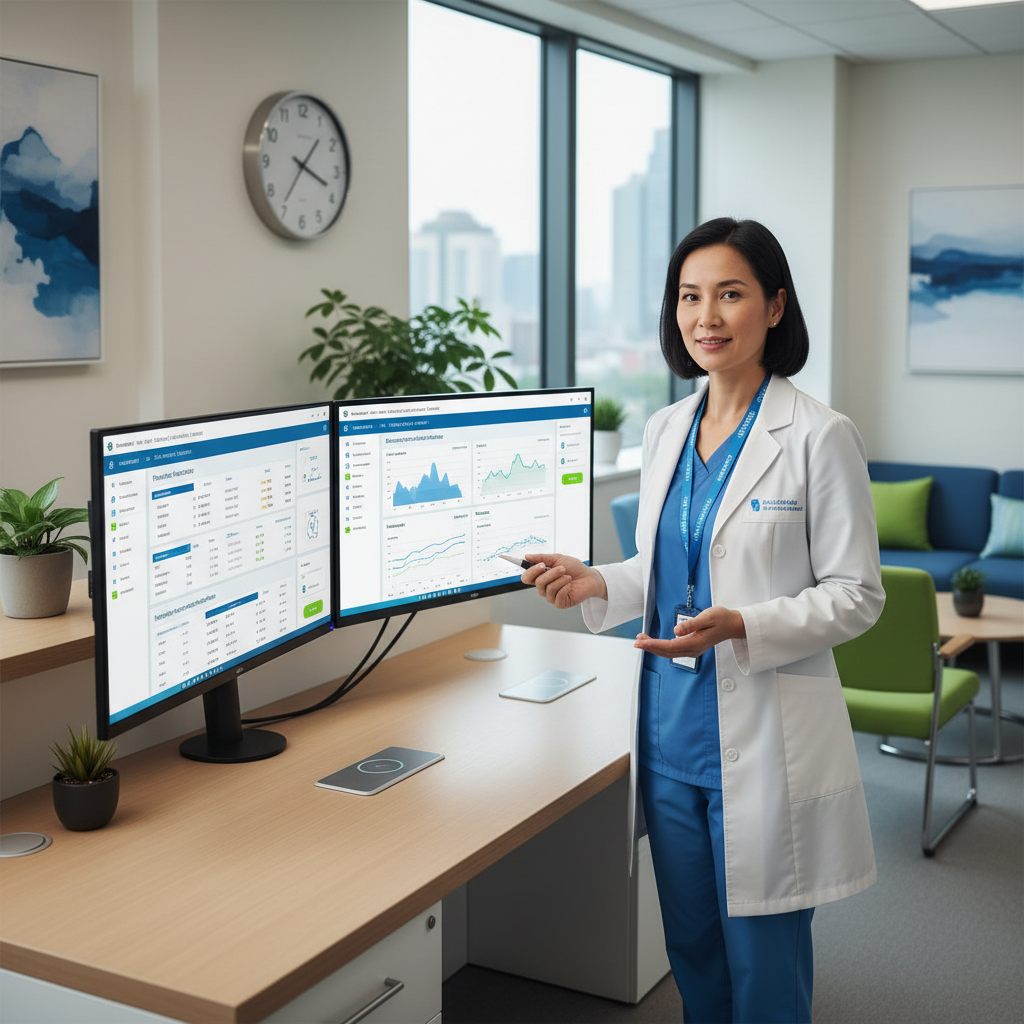
Remote patient monitoring (RPM) has transformed chronic care management — but without intelligent filtering, it can overwhelm the very clinicians it's meant to support. Alert fatigue is one of the most pressing challenges facing modern RPM programs, and artificial intelligence is emerging as the most powerful solution to date.
The Alert Fatigue Crisis in Remote Patient Monitoring
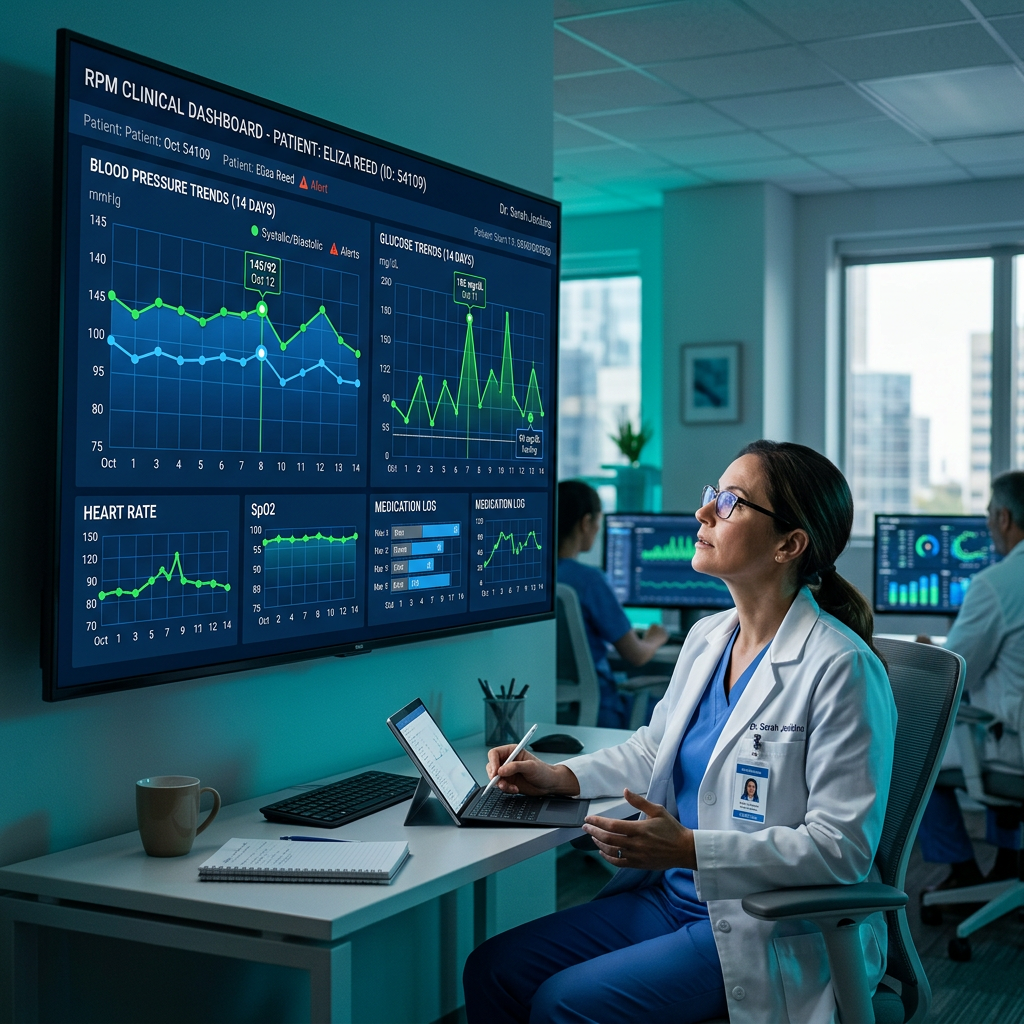
Walk into any clinical care coordination center and you'll quickly notice the same phenomenon: nurses and physicians surrounded by dashboards, pinging devices, and escalating notification queues. Alert fatigue — the desensitization that occurs when clinicians receive too many notifications — is not just an inconvenience. It's a patient safety crisis.
In traditional RPM programs, alerts are triggered by threshold-based rules: if a patient's blood pressure exceeds 140/90 mmHg, the system fires a notification. If their oxygen saturation drops below 94%, another alert goes out. These rules are blunt instruments. They don't account for a patient's individual baseline, their daily patterns, or whether a reading is clinically meaningful in context.
The Numbers Behind the Problem
The scale of this challenge is significant:
Clinical Insight: "Alert fatigue doesn't just waste time — it erodes clinical judgment. When every alert sounds urgent, none of them feel urgent. That's when real emergencies get missed." — Dr. Chomba Chuma, MD, Founder of iScript.care
When clinicians stop trusting their alert systems, they begin to ignore or delay responses. This is the moment that preventable hospitalizations and adverse events occur — the exact outcomes RPM programs are designed to prevent.
How AI Is Changing the Alert Landscape
Artificial intelligence and machine learning are fundamentally rewriting the rules of remote patient monitoring alerts. Rather than relying on static threshold triggers, AI-powered platforms analyze data dynamically, learning from each patient's individual health trajectory to distinguish clinically meaningful signals from background noise.
Machine Learning Models That Adapt Over Time
Modern AI in RPM doesn't just react — it learns. Machine learning algorithms are trained on large datasets of patient vitals, outcomes, and clinical interventions. Over time, these models develop the ability to:
This shift from rule-based alerting to predictive analytics is one of the most significant advances in chronic care management technology over the last decade.
Predictive Analytics in Chronic Care: Real-World Impact
Predictive analytics moves RPM from reactive to proactive. Instead of waiting for a blood pressure reading to cross a threshold, AI models can predict which patients are likely to experience a hypertensive crisis in the next 48–72 hours — giving care teams a window to intervene before the emergency occurs.
For patients managing conditions like heart failure, COPD, diabetes, and hypertension, this predictive capability is life-changing. Consider the following:
At iScript.care, Dr. Chomba Chuma, MD has built the platform's monitoring infrastructure around this predictive-first philosophy — ensuring that the clinical team is guided by intelligence, not inundated by noise.
---
Infographic Insight
📊 Visual Infographic: "From Noise to Signal — How AI Transforms RPM Alerts"
>
The following data points and workflow steps should be illustrated in a flow-chart or comparative infographic format:
---
Key Components of AI-Powered Alert Optimization
Not all AI in RPM is created equal. Understanding what separates effective platforms from ineffective ones helps healthcare decision-makers choose the right program for their patient population.
Natural Language Processing and Clinical Documentation
Advanced RPM platforms are now integrating natural language processing (NLP) to extract risk signals from clinical notes, patient-reported symptoms, and care team communications. A patient who mentions feeling "more winded than usual" in a brief check-in message may have that phrase flagged as a potential early decompensation signal — triggering a proactive outreach before vitals deteriorate.
Continuous Learning and Model Refinement
The best AI systems in healthcare don't remain static. They employ continuous learning loops — meaning that every clinical intervention, every hospitalization, and every resolved alert feeds back into the model to improve future predictions. This is a meaningful distinction from one-time trained algorithms that degrade in accuracy over time.
Integration with Electronic Health Records (EHRs)
AI alert optimization works best when it has access to the full clinical picture. Platforms that integrate seamlessly with EHR systems can factor in:
iScript.care's chronic care and remote management program is built with this kind of comprehensive clinical intelligence in mind — ensuring that alerts are evaluated against the patient's full health context, not just their most recent device reading.
---
Comparing Traditional RPM Alerting vs. AI-Enhanced Alerting
The following table illustrates the key differences between conventional threshold-based alerting and modern AI-powered alert optimization:
| Feature | Traditional RPM Alerting | AI-Enhanced RPM Alerting |
|---|---|---|
| Alert Trigger Mechanism | Static population-based thresholds | Dynamic, individualized baselines |
| Multi-Variable Analysis | Single-metric evaluation | Simultaneous multi-variable correlation |
| False Positive Rate | High (often >80%) | Significantly reduced (estimated 60–80% reduction) |
| Predictive Capability | Reactive only | Proactive — 24–72 hour risk forecasting |
| Alert Prioritization | Chronological (first-in, first-out) | Acuity-ranked by clinical risk score |
| Model Improvement Over Time | None — static rule sets | Continuous learning from outcomes data |
| EHR Integration | Limited | Deep integration with clinical context |
| Care Team Workload | High — clinician reviews all alerts | Focused — AI pre-filters to actionable alerts |
| Patient Outcomes Impact | Moderate | Strong — demonstrated reduction in avoidable hospitalizations |
This comparison makes clear why healthcare organizations are increasingly investing in AI remote patient monitoring platforms that go beyond basic connectivity.
---
The Role of the Physician in AI-Driven RPM
It is essential to state clearly: AI does not replace clinical judgment — it amplifies it. The most effective RPM programs maintain the physician at the center of the care model, using AI to eliminate the noise so that clinicians can focus on what they do best.
Dr. Chomba Chuma, MD, emphasizes this principle throughout iScript.care's design philosophy. The platform's provider network is composed of board-certified physicians and care coordinators who review AI-generated risk signals and make the ultimate clinical decisions. The algorithm informs; the physician decides.
This is a critical distinction in an era where "AI-first" can sometimes mean "physician-last." At iScript.care, the doctor-led model ensures:
For patients, this means they receive the benefits of 24/7 AI monitoring without sacrificing the reassurance of genuine physician engagement. You can learn more about this approach on the iScript.care About page.
---
AI-Driven RPM Across Chronic Conditions
The applications of AI alert optimization extend across the full spectrum of chronic disease management. Here is how AI is making a measurable difference in specific conditions:
Cardiovascular Disease and Heart Failure
Patients with congestive heart failure experience fluid accumulation that often precedes acute decompensation by 3–5 days. AI models trained on weight trends, heart rate variability, and symptom reports can detect this trajectory early — prompting diuretic adjustments or urgent clinical review before hospitalization becomes inevitable.
Chronic Obstructive Pulmonary Disease (COPD)
COPD exacerbations are a leading driver of emergency department visits and hospitalizations. AI-enhanced RPM monitors oxygen saturation, respiratory rate, and activity levels simultaneously — identifying the early signatures of exacerbation and enabling preemptive intervention with steroids or antibiotics.
Diabetes and Metabolic Health
For patients using continuous glucose monitors (CGMs) and connected glucometers, AI can identify glycemic variability patterns that predict hypoglycemic episodes — reducing dangerous events and improving overall metabolic control. iScript.care's GLP-1 program leverages this monitoring capability for patients managing obesity and type 2 diabetes.
Hypertension
Blood pressure readings are highly variable. AI distinguishes between white coat hypertension, masked hypertension, and genuine uncontrolled hypertension by analyzing readings across different times of day, activity states, and contextual factors — enabling far more precise medication management than periodic office visits allow.
---
What Healthcare Providers and Decision-Makers Should Look For
If you are evaluating AI-powered RPM platforms for your practice or health system, consider the following criteria:
Visit the iScript.care FAQ page for detailed answers to common questions about our RPM program structure, billing, and clinical oversight model. You can also explore our full blog and resource library for additional educational content on chronic care management technology.
---
Conclusion
Alert fatigue in remote patient monitoring is not an inevitable side effect of better technology — it is a solvable problem. Machine learning, predictive analytics, and AI-powered signal processing are rapidly transforming RPM from a high-volume, high-noise monitoring model into a precision care tool that delivers the right information to the right clinician at the right moment.
The evidence is clear: AI-enhanced RPM reduces false positives, identifies high-risk patients earlier, decreases preventable hospitalizations, and meaningfully improves outcomes for patients managing chronic conditions. But the technology is only as good as the clinical framework around it. Programs that place physicians at the center — using AI to enhance rather than replace clinical judgment — consistently deliver superior results.
At iScript.care, our physician-led, AI-powered platform was designed from the ground up with this balance in mind. Founded by Dr. Chomba Chuma, MD, our mission is to ensure that every patient receives the monitoring they need, every care team has the intelligence they require, and no clinician ever has to dismiss a critical alert simply because they've been buried under hundreds of irrelevant ones.
The future of chronic care management is not louder — it is smarter. And that future is available today.
---
Ready to reduce alert fatigue and transform your RPM program? Contact iScript.care today to speak with our clinical team, or start a free patient assessment to see how our AI-powered monitoring platform can work for your patients. The right signal, at the right time, can save a life — let us help you hear it.
Ready to Take Control of Your Health?
Start your free assessment today and connect with licensed physicians — all from the comfort of home.