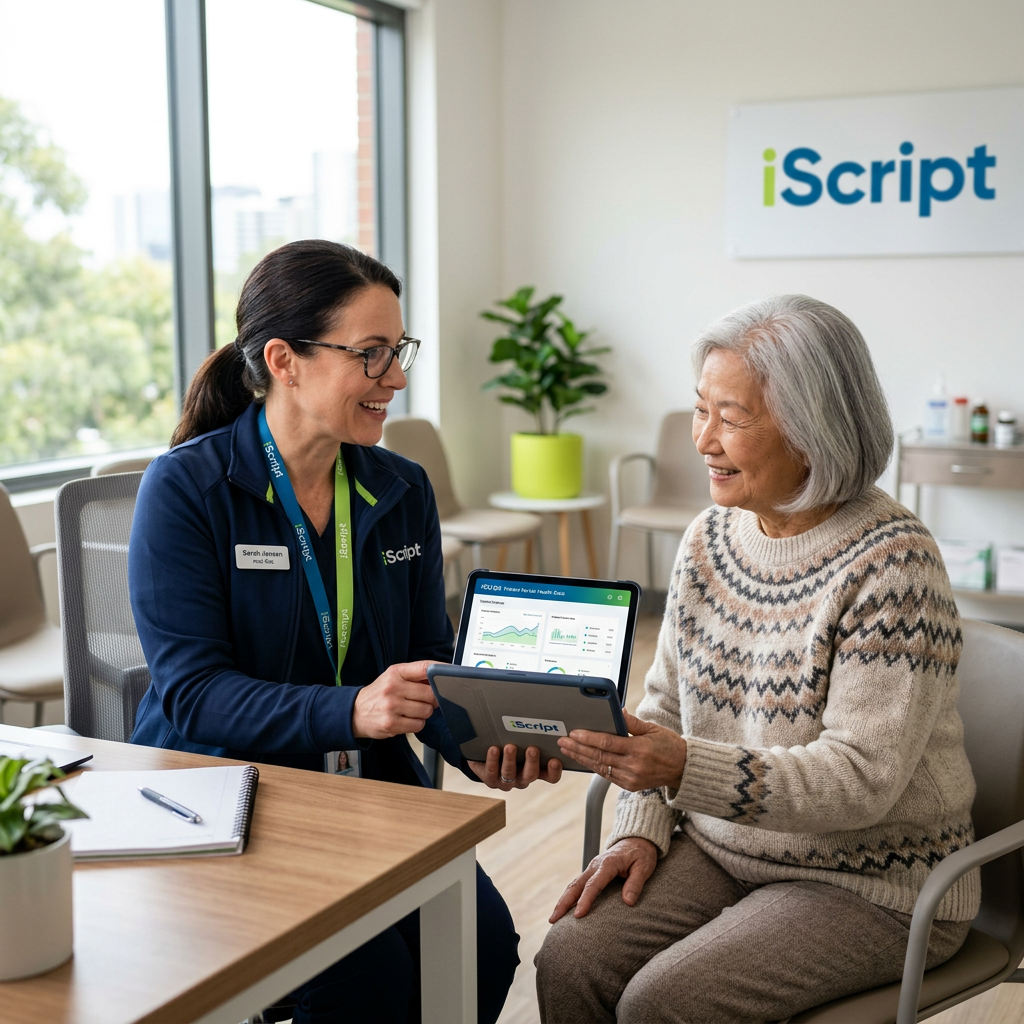
Compounded vs. Brand-Name GLP-1 Medications: What Patients Should Understand
The rising demand for GLP-1 receptor agonists like semaglutide and tirzepatide has created a complex landscape where patients are increasingly encountering both FDA-approved brand-name medications and compounded alternatives — often at dramatically different price points. Understanding the clinical,
Compounded vs. Brand-Name GLP-1 Medications: What Patients Should Understand
The rising demand for GLP-1 receptor agonists like semaglutide and tirzepatide has created a complex landscape where patients are increasingly encountering both FDA-approved brand-name medications and compounded alternatives — often at dramatically different price points. Understanding the clinical, regulatory, and safety differences between these two categories is not just a matter of cost management; it is a matter of patient safety and treatment outcomes. At iScript.care, Dr. Chomba Chuma, MD has made it a clinical priority to ensure patients and providers have the clearest possible guidance before making this important decision.
---
The GLP-1 Medication Boom: Why This Conversation Matters Now
GLP-1 receptor agonists have transformed the treatment of type 2 diabetes and obesity over the past several years. Drugs like Ozempic® (semaglutide for diabetes), Wegovy® (semaglutide for obesity), and Mounjaro®/Zepbound® (tirzepatide) have demonstrated remarkable efficacy in clinical trials and real-world practice.
According to data published in the New England Journal of Medicine, participants in the STEP 1 trial using semaglutide 2.4 mg weekly achieved an average weight reduction of 14.9% of their body weight over 68 weeks — a result previously achievable only through bariatric surgery.
But these medications come at a cost. Wegovy carries a list price of over $1,300 per month without insurance, and coverage remains inconsistent across payers. This pricing gap has driven a significant portion of patients toward compounded alternatives — sometimes without fully understanding what they are purchasing.
What Are GLP-1 Medications, Exactly?
GLP-1 (glucagon-like peptide-1) receptor agonists mimic the effects of the body's natural incretin hormone. They:
These mechanisms work together to lower blood sugar, reduce cardiovascular risk, and support significant and sustained weight loss — making GLP-1s one of the most clinically impactful drug classes to emerge in decades.
---
Brand-Name GLP-1 Medications: What FDA Approval Actually Means
When a medication receives FDA approval, it has gone through a rigorous multi-phase process involving:
For semaglutide specifically, Novo Nordisk invested years and billions of dollars in the SUSTAIN and STEP trial programs. These studies enrolled tens of thousands of patients and produced the evidence base that supports current prescribing guidelines.
Key Brand-Name GLP-1 Medications Currently Available
| Medication | Brand Name | Indication | Dose | Manufacturer |
|---|---|---|---|---|
| Semaglutide (injectable) | Ozempic® | Type 2 Diabetes | 0.5–2 mg/week | Novo Nordisk |
| Semaglutide (injectable) | Wegovy® | Obesity/Weight Management | 2.4 mg/week | Novo Nordisk |
| Semaglutide (oral) | Rybelsus® | Type 2 Diabetes | 7–14 mg/day | Novo Nordisk |
| Tirzepatide (injectable) | Mounjaro® | Type 2 Diabetes | 5–15 mg/week | Eli Lilly |
| Tirzepatide (injectable) | Zepbound® | Obesity/Weight Management | 5–15 mg/week | Eli Lilly |
| Liraglutide (injectable) | Victoza® / Saxenda® | Diabetes / Obesity | 1.2–3 mg/day | Novo Nordisk |
What FDA approval guarantees — purity, potency, sterility, and manufacturing consistency — is critically important for any injectable medication. Every lot of Wegovy or Ozempic must meet strict quality standards before it reaches a patient.
---
Compounded GLP-1 Medications: What Patients Need to Know
Compounded medications are drugs that are individually prepared by compounding pharmacies — typically when a commercially available product is unavailable, when a patient requires a customized dose or formulation, or when cost is a prohibitive barrier.
During the FDA-declared shortage of semaglutide and tirzepatide (which persisted from 2022 through early 2024), 503A and 503B compounding pharmacies were legally permitted to produce and sell compounded versions of these medications. The FDA's guidance on compounding makes clear that this is a narrow, shortage-based exception — not a permanent authorization.
How Compounding Pharmacies Operate
There are two main categories of compounding pharmacies relevant to GLP-1s:
Not all compounding pharmacies operate under the same level of oversight. A 503A pharmacy may produce medications without the same quality testing requirements as an FDA-approved manufacturer. This is not inherently unsafe — many compounding pharmacies are reputable and rigorous — but the absence of mandatory, standardized testing creates variability that patients and providers must acknowledge.
What Is Actually in Compounded Semaglutide?
This is one of the most important clinical questions. Brand-name Wegovy and Ozempic contain semaglutide as the active pharmaceutical ingredient (API). Many compounding pharmacies have used semaglutide sodium or semaglutide acetate salt forms, which are chemically different from the base semaglutide used in approved products.
The FDA has raised explicit concerns about this distinction. As of 2024, the agency issued warnings indicating that semaglutide salts are not the same as semaglutide and have not been evaluated for safety or efficacy in clinical trials. Prescribers and patients should be aware that what is labeled "compounded semaglutide" may not be pharmacologically equivalent to what has been studied in landmark trials.
---
Infographic Insight
📊 Suggested Infographic: "Compounded vs. Brand-Name GLP-1s — A Side-by-Side Clinical Comparison"
This infographic should visually compare the two categories across the following key data points, using a split-panel or comparison table format:
---
The FDA Shortage Status: A Changing Legal Landscape
One of the most misunderstood aspects of the compounded GLP-1 market is its legal foundation. Compounding of FDA-approved drugs in shortage is permitted under Section 503A and 503B of the Federal Food, Drug, and Cosmetic Act, but only while the shortage designation remains active.
"In March 2024, the FDA removed semaglutide from its drug shortage database, signaling that commercially manufactured supply had normalized. This triggered a legal transition period for compounding pharmacies, with deadlines for 503A and 503B facilities to cease production of compounded semaglutide."
This has significant implications for patients currently using or considering compounded semaglutide. The regulatory environment is no longer the same as it was during peak shortage. Patients should:
---
Comparing Compounded vs. Brand-Name GLP-1s: A Clinical and Practical Breakdown
| Feature | Brand-Name (e.g., Wegovy) | Compounded (e.g., Compounded Semaglutide) |
|---|---|---|
| FDA Approval | Yes — full NDA approval | No — shortage-based compounding exception |
| Active Ingredient | Semaglutide (base form) | Often semaglutide sodium or acetate salt |
| Clinical Trial Data | Robust — Phase III RCTs | None specific to compounded formulation |
| Manufacturing Standards | CGMP-compliant | Variable — depends on pharmacy type |
| Cost (without insurance) | $1,200–$1,400/month | $150–$500/month |
| Insurance Coverage | Covered by some plans | Typically not covered |
| Dose Accuracy | Verified and standardized | Variable by pharmacy |
| Availability | Currently normalized | Legally restricted as shortage resolves |
| Physician Oversight | Required | Required — but varies by platform |
---
Why Physician Oversight Is Non-Negotiable for Either Option
Whether a patient chooses brand-name or compounded GLP-1 therapy, ongoing clinical oversight is not optional — it is essential. GLP-1 medications require careful dose titration, monitoring for gastrointestinal side effects, screening for contraindications (including personal or family history of medullary thyroid carcinoma or MEN2 syndrome), and regular assessment of metabolic markers.
This is precisely why the iScript.care GLP-1 program is structured around physician-led, AI-assisted monitoring. Dr. Chomba Chuma, MD built the iScript.care model on the principle that technology should amplify — not replace — clinical judgment. Every patient enrolled in iScript's GLP-1 program receives:
What to Ask Before Starting Any GLP-1 Therapy
Regardless of which formulation a patient or provider is considering, these questions should be addressed:
These are not bureaucratic questions. They are the difference between safe, effective treatment and an unmonitored clinical risk.
---
The Cost Reality: Navigating Access Without Sacrificing Safety
It would be medically and ethically irresponsible to dismiss the cost barrier that drives many patients toward compounded alternatives. Obesity and type 2 diabetes are chronic conditions that disproportionately affect lower-income populations, and a medication that costs over $1,300/month is simply inaccessible for millions of Americans without robust insurance coverage.
According to the CDC's National Diabetes Statistics Report, over 37 million Americans have diabetes, and approximately 96 million have prediabetes. The economic burden of GLP-1 inaccessibility is not theoretical.
Patients and providers exploring cost-effective access to GLP-1 therapy should consider:
The goal is never to choose between access and safety. The goal is to build systems where patients can have both.
---
What Providers Should Know: Liability and Documentation
For healthcare providers, the compounded GLP-1 landscape carries specific professional liability considerations. Prescribing a compounded medication — particularly one that uses a non-equivalent API like semaglutide acetate — may expose providers to risk if adverse outcomes occur and the medication's equivalence to an approved product cannot be established.
Providers prescribing via iScript.care's provider network benefit from structured clinical protocols, documented informed consent workflows, and AI-assisted monitoring that creates a defensible clinical record. This is not just about efficiency — it is about practicing at the highest standard of care in an era where GLP-1 therapy is both high-demand and high-scrutiny.
The chronic care and remote patient monitoring program at iScript.care is designed specifically to support providers managing patients with chronic metabolic conditions at scale, without sacrificing the quality of individualized care.
---
Conclusion
The conversation around compounded vs. brand-name GLP-1 medications is not black and white. Brand-name products offer the gold standard of regulatory oversight, clinical evidence, and manufacturing consistency — but their cost remains a genuine barrier to access for a significant portion of patients who could benefit most. Compounded alternatives have served an important role during periods of supply shortage, but the legal and safety landscape is changing rapidly, and patients deserve full transparency about what they are receiving.
What remains constant — regardless of which product a patient ultimately uses — is the irreplaceable value of physician-led, continuously monitored care. GLP-1 therapy is not a vending machine transaction. It is a clinical intervention with real physiological effects, real contraindications, and real long-term implications for metabolic health.
At iScript.care, Dr. Chomba Chuma, MD and the clinical team are committed to being the most trusted, transparent, and evidence-driven resource for patients and providers navigating this space. Whether you are a patient trying to understand your options, a provider looking to expand your GLP-1 program, or a healthcare decision-maker evaluating telehealth partnerships, the answers you need start with a conversation rooted in clinical integrity.
If you have questions about GLP-1 therapy, want to review your eligibility, or are ready to get started with a physician-supervised weight management program, start your free assessment at iScript.care today — or contact our team directly to learn how iScript.care can support your clinical goals. You can also explore our full library of evidence-based patient and provider resources at the iScript.care blog.
---
This article is for educational purposes only and does not constitute medical advice. Always consult a licensed healthcare provider before starting, stopping, or modifying any medication regimen.
Written by Dr. Chomba Chuma, MD & Founder, iScript.care
Ready to Take Control of Your Health?
Start your free assessment today and connect with licensed physicians — all from the comfort of home.